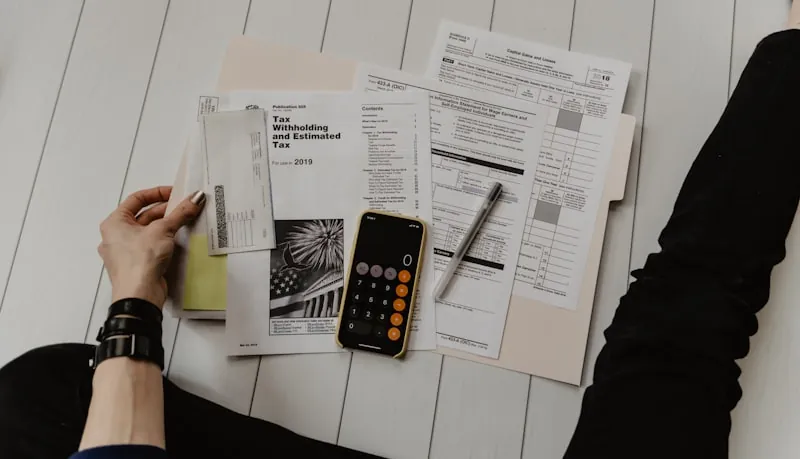
April 2023, I'm going through receipts at 2am. Standing desk from November. MacBook from January. That $800 ergonomic chair I bought after my back gave out in February. There's gotta be something here that helps with taxes, right?
Short answer if you're freelancing or running your own business: yeah.
Can You Write Off Home Office Equipment?
You can write this stuff off when you're self-employed and using it exclusively for work. Your desk, chair, monitors, computer, all of it counts. W-2 employee though? The 2018 tax changes killed that option, and the 2025 tax law made it permanent. It's not coming back in 2026.
The IRS word that matters most here: "exclusively."
Everything in your home office. The space itself and what's in it. Needs to be for business only. Office also functions as a guest room? Laptop streams Netflix between client calls? That's the gray zone where the IRS starts asking questions.
What counts as deductible
If you meet the requirements (coming up), here's what you can write off:
Office furniture: your desk whether it's standing or sitting or some combo. Chair. Filing cabinet if that's still your thing. Bookshelf for actual business books, not your Stephen King collection. Lamps for task lighting.
Technology and equipment: computers of any kind. Desktop, laptop, maybe a tablet if you actually use it for work. Display screens. All those input devices you need, keyboards and mice and drawing tablets. Printer, scanner, whatever office machines you've got. Webcam and microphone for the endless video calls. External storage drives.
Software subscriptions: accounting platforms.I use QuickBooks but FreshBooks and Wave work too. Whatever project management tool you're into, could be Notion or ClickUp or Asana. Cloud storage services. VPN if you need secure connections.
Under $2,500 per item? You can usually just expense it the year you buy it, using the IRS de minimis safe harbor. You elect it on your return, so tell whoever does your taxes.
Bigger stuff used to get complicated. Not so much anymore. The One Big Beautiful Bill Act, signed in July 2025, brought back 100% bonus depreciation for good, for equipment acquired after January 19, 2025. And the Section 179 limit for 2026 is $2,560,000. So that $3,000 workstation can come off this year's taxes too, if that's what you want.
Two requirements the IRS checks
Not handing these out automatically. You need both:
Using the space regularly and only for business
Your home office is where you consistently work. Not just when inspiration strikes. The space doesn't pull double duty as anything else. Either it's your main workspace or where you meet clients face to face.
Converted a spare bedroom into your office? You're good. Set up a permanent desk area in the corner of your living room? That can work if that corner stays work-only. Kitchen table where you also eat meals? IRS will shoot that down.
Being self-employed or owning the business
This applies to freelancers, consultants, anyone getting 1099 forms. Business owners with an LLC, S-corp, sole proprietorship setup.
W-2 employees working remote can't claim this anymore, even when the company requires you to work from home. Tax law changes from 2017 killed employee home office deductions through 2025 per the IRS. Then the 2025 tax bill made that permanent. Frustrating, but that's reality. A few states still let employees deduct some unreimbursed work costs on the state return. Pennsylvania is one, with its own rules. Worth checking yours.
How to calculate the deduction
Two approaches depending on your situation.
Simplified: five bucks per square foot of office space, caps at 300 square feet according to the IRS. Equipment gets deducted on top of that $1,500 max.
Regular method: figure out what percentage of your home is office space, then deduct that same percentage of eligible home expenses plus the equipment. Takes more work but usually results in bigger numbers if your setup cost real money.
Example
Say you dropped $800 on a standing desk for your office. Your office takes up 150 square feet, your whole place is 1,500 square feet.
Simplified calculation: that $800 for equipment, then add $750 from the space math (150 square feet times five bucks each). Comes to $1,550 total.
Regular method: same $800 for equipment, plus 10% of all your home costs since the office is 10% of your space. Mortgage interest, utilities, insurance, all of it factors in. Usually works out better financially.
Most freelancers go with the regular method after running actual numbers.
What triggers audits
IRS loves auditing home office claims. Here's what gets their attention:
Writing off dual-use items at 100%
Your laptop serves work and personal use? Can't deduct the full thing. Need to estimate how much goes to business versus personal. Most people land around 80 or 90 percent for their main work machine.
No paper trail
Telling the IRS "I think I dropped like $3,000 on equipment" doesn't fly. You need receipts, invoices, bank statements backing up every single deduction. No receipt equals no deduction, that's the rule.
Claiming purchases before launching
Bought that desk three months before officially starting your freelance work? Different category. Startup costs. Only counts if you bought it while the business was actually operating.
Unrealistic space claims
Home office somehow taking up your entire 2,000 square foot house? IRS will demand proof. Be honest with square footage. Keep photos or a basic floor plan ready in case they audit.
Tracking and documentation
Good records protect you. Here's what actually works:
Expense tracking software handles this automatically. I use QuickBooks, some people prefer FreshBooks or Wave. They sort purchases into categories and store digital copies of receipts. Way better than that box of faded thermal paper receipts.
Separate business card or bank account makes everything cleaner. Shows the IRS you're keeping business and personal finances apart, which they appreciate seeing.
Photos of receipts matter because thermal paper fades. Buy something for the office? Pull out your phone, snap it, upload somewhere safe. Organize however makes sense to you. By year, by category, whatever.
Document the actual office space too. Photos showing it's dedicated workspace, not a corner of your bedroom. Measurements proving the square footage you're claiming. Simple floor plan sketch. All valuable if they audit you.
For equipment serving both purposes. Your primary laptop, whatever. Track one month of usage. Business time versus personal time. That percentage becomes your deduction basis.
What to do from here
Now that you know equipment is deductible, here's the move:
Read through the complete freelancer tax guide to see everything available. Check the detailed furniture expensing guide for categorization specifics. Get expense tracking software running before buying more gear. Still building the setup? Here's a full home office for around $500, and our ergonomic chair picks if your back is the reason you're reading this. And honestly, talk with an actual tax professional about your situation because this is educational content, not real tax advice.
Disclaimer: this covers general education about home office deductions. Tax code stays complex and keeps evolving. Consult with a qualified tax pro or CPA about your specific circumstances. I'm not a tax advisor, this content isn't professional tax advice.