Realized last year my desk had become a disaster. Four pens, old receipts, random charging cables, a stack of books I kept meaning to read. My brain felt cluttered too. Every morning felt like I had to push through the junk just to start working.
Started over. Stripped everything off the desk. Gave away half of it. Kept what I actually used.
Best decision I made for my work-from-home life.
Why Less Stuff Actually Works
Your brain processes every item in your visual field. Even stuff you're ignoring. Subconsciously your mind is tracking that old coffee mug, those scattered papers, that charger you haven't used in months. Mental energy gets wasted.
Remote work makes this worse. Already fighting distractions from home life. Kids, laundry, that weird noise the fridge makes. Adding desk clutter to the mix? Recipe for scattered thinking.
What actually changes when you strip things down:
- You focus faster. Less visual noise competing for attention.
- Decisions get simpler. Less stuff to manage, organize, lose.
- Morning startup takes seconds. Sit down, open laptop, work.
- Money stays in your pocket. Stop buying things that don't help.
- Cleaning becomes trivial. Dust a flat surface? Takes thirty seconds.
- You can work anywhere. Pack up and move in five minutes.
The Principles That Actually Work
Everything Needs a Reason
Random stuff accumulates. It just does. Fighting that means questioning everything on your desk. What does this do for me? When did I last use it? Would I miss it?
Kept a small cactus my daughter gave me. Gets water once a month, makes me smile. That earns its spot. The stress ball from some conference three years ago? Gone.
One Good Thing Beats Three Mediocre Things
Had three different notepads at one point. Why? Grabbed whichever was closest. Now I have one decent notebook. When it's full, I buy another one. Same pen. Same water bottle. Same everything.
Weird how much mental energy gets freed up when you stop managing multiples.
Clear Surfaces When Not Working
During work: laptop, coffee, maybe headphones. End of day: everything goes away. Desk becomes empty. That emptiness signals to my brain that work is done. Important boundary when home and office are the same building.
Buy Less But Buy Better
This is counterintuitive. Minimalism isn't about being cheap. My chair cost real money. But I don't have a chair plus a seat cushion plus a lumbar pillow plus a footrest. Just one thing that works.
Less Paper, More Pixels
Notes in an app. Documents in cloud storage. The only paper on my desk is whatever I'm actively working with. Usually nothing.
What You Actually Need
The bare minimum to do knowledge work (if you want actual products and prices, see our $500 home office setup):
- Some kind of surface. Table, desk, kitchen counter. Doesn't matter.
- Something to sit on. Chair helps.
- A computer. Obviously.
- Internet that works. WiFi or plugged in.
- Light. Preferably from a window.
That's it. Five things. Everything else is optional.
For People Doing This Full-Time
Eight plus hours:
- External monitor. Your neck will thank you.
- Real keyboard. Laptop keyboards are tolerable, not great.
- Mouse. Trackpads work but mice are better for extended use.
- Headphones. For calls and for blocking out the world.
Maybe Nice But Not Required
- Better webcam if you're on video calls constantly.
- One plant. Not five. One.
- Small notebook for quick scribbles during meetings.
What You Don't Need
- Multiple monitors. One big one is enough for most work.
- Those drawer organizers full of clips and rubber bands.
- A printer. Seriously. Go to Staples twice a year.
- Filing cabinets. Everything is digital now.
- Decorations you feel obligated to keep.
- That gadget you bought and used twice.
How to Actually Declutter
Did this on a Sunday afternoon. Took about two hours.
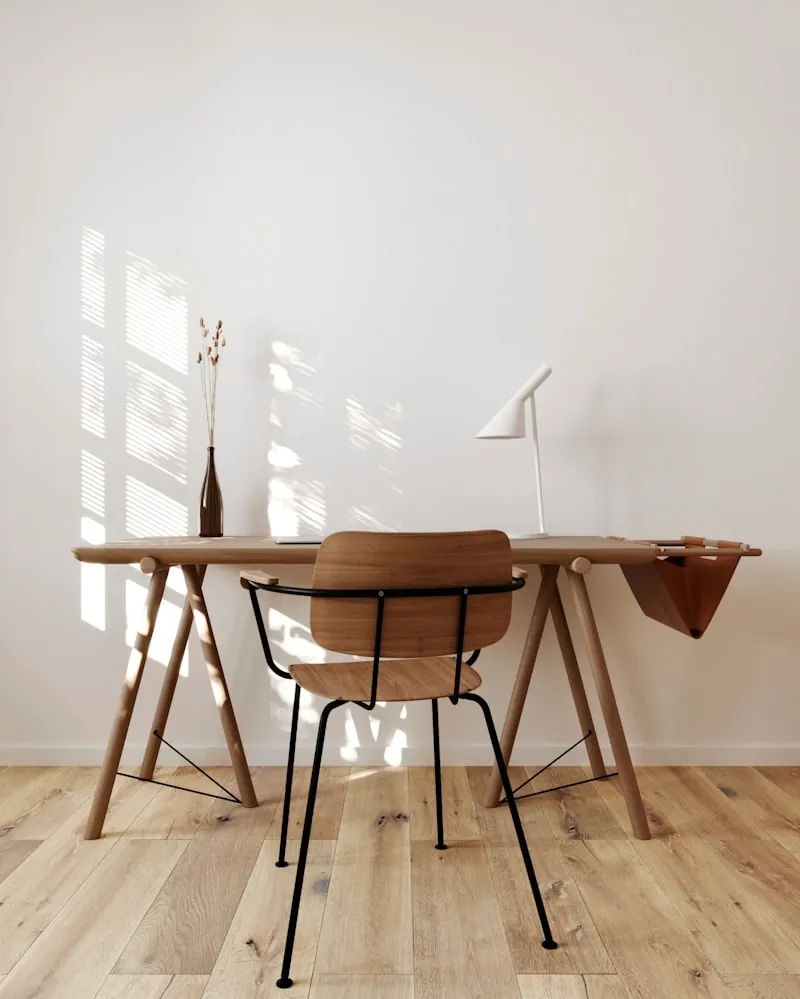
Clear everything off the desk. Everything. Box it up or put it on the floor. Look at the empty surface. Notice how peaceful that feels.
Clean it. Wipe it down. Start fresh.
Add things back one at a time. Only if you genuinely need them to do work tomorrow. Not "might need someday." Need tomorrow.
Everything else needs a home that isn't your desk. Drawer. Closet. Donation box. Garbage. Be honest with yourself about what you actually use.
Going forward: one thing comes in, one thing goes out. Prevents the pile-up from happening again.
The Setup Itself
During work hours my desk has:
- Monitor at eye level. Or laptop on a stand.
- Keyboard and mouse in front.
- One item off to the side. Usually coffee.
- That's all.
Everything else is hidden. In drawers, in a cabinet, somewhere not visible.
End of Day Ritual
Two minutes. Non-negotiable. Before I close the laptop:
- Put away whatever accumulated during the day.
- Any paper gets dealt with or trashed.
- Quick wipe down.
- Tomorrow morning's desk is ready now.
This creates a real ending to the workday. Important when your commute is twelve steps down the hall.
Cables Are Visual Clutter Too
Wireless everything that can be wireless. Keyboard, mouse, headphones.
One cable to the laptop if using a dock setup. Everything else hidden behind the desk or under it.
Power strips go underneath where you can't see them.
Digital Clutter Counts
Clean desk with chaotic computer defeats the purpose.
- Desktop should be empty or nearly empty. Files go in folders.
- Browser tabs get closed. Bookmark things for later instead of leaving forty tabs open.
- Notifications off except truly urgent stuff. Check messages on your schedule.
- One tool per job. Not three note apps. One.
Keeping It This Way
Daily: Start clean, end clean.
Weekly: Quick scan. What accumulated? Get it off the desk.
Monthly: Full review. Does everything still deserve to be here?
The Hard Parts
Things pile up when you're busy. Fix: Friday afternoon reset. Fifteen minutes. Put it on the calendar.
Need reference materials for work. Fix: Digital where possible. Physical stuff goes in a closed cabinet, not visible.
Family keeps leaving stuff in your workspace. Fix: Small basket. Things that appear get moved to the basket. Basket gets emptied elsewhere daily.
Questions People Ask
Frequently Asked Questions
Where to Start
Don't try to achieve perfect minimalism by Friday. Take one thing off your desk today. Something you don't use, don't need, don't love.
Tomorrow, another thing.
Week from now, your desk has only what matters.
The goal isn't owning the least stuff. It's having exactly what you need. Peaceful space. Clear mind. Ready to work.
If your current setup doesn't feel like that, maybe time to strip some things away.